
If you’re exploring ways to improve your skin’s texture, reduce wrinkles, or minimize acne scars, you’ve probably come across chemical peels and microneedling. Both treatments are highly effective, non-surgical options, but they work differently and target different skin concerns.
Understanding the differences between chemical peel vs microneedling is essential for choosing the right procedure for your skin. In this blog, we’ll explain how each treatment works, its benefits, recovery, and which is better for specific skin issues.
What Is A Chemical Peel?
A chemical peel is a skin treatment that uses a chemical solution to remove damaged outer layers of skin. By encouraging the growth of new skin, chemical peels help improve texture, tone, and overall skin appearance.
How Chemical Peels Work
A chemical solution, usually containing acids like glycolic acid, salicylic acid, or trichloroacetic acid, is applied to the skin. This solution causes controlled exfoliation, removing dead skin cells and promoting collagen production. Over time, this reveals fresh, healthy skin that looks smoother and more radiant.

Benefits of Chemical Peels
Chemical peels offer multiple benefits:
- Reduce fine lines and wrinkles (chemical peel for fine lines)
- Minimize acne scars and hyperpigmentation
- Improve skin tone and texture
- Brighten dull skin
- Stimulate collagen production for firmer skin
Types of Chemical Peels
- Superficial Peels: Light exfoliation for brightening and minor imperfections
- Medium Peels: Penetrate deeper to reduce fine lines, pigmentation, and moderate acne scars
- Deep Peels: Intensive treatment for severe wrinkles or deep skin damage; requires longer recovery
Procedure and Recovery
During a chemical peel, your skin is cleansed, the chemical solution is applied, and then neutralized. Recovery varies depending on peel depth:
- Light peels: little to no downtime
- Medium peels: 3–7 days of mild peeling
- Deep peels: up to 2 weeks of recovery
Post-care involves moisturizing, avoiding direct sun exposure, and applying SPF to protect new skin.
Cost of Chemical Peels
The cost of a chemical peel depends on several factors, including the clinic, the expertise of the provider, and the area being treated. On average, chemical peels can range from $150 to $600 per session.
While price is an important consideration, it’s equally essential to focus on quality and safety. A professional treatment ensures proper technique, effective results, and minimal risk of complications. Keep in mind that multiple sessions may be recommended to achieve the desired results, which can influence the overall cost.
What Is Microneedling?
Microneedling is a minimally invasive procedure that uses tiny needles to create micro-injuries in the skin. This process triggers the body’s natural healing response and stimulates collagen and elastin production, resulting in smoother, firmer skin.
How Microneedling Works
During a session, a numbing cream is applied for comfort. Then, a device with fine needles is rolled or stamped over the skin, creating microchannels. These tiny injuries prompt the skin to repair itself, improving texture and reducing scars and fine lines.

Benefits of Microneedling
Microneedling offers:
- Reduction of wrinkles and fine lines
- Improvement in acne scars and stretch marks
- Smaller pores and firmer skin
- Enhanced overall skin texture
- Long-term collagen stimulation
When comparing microneedling vs chemical peel for wrinkles, microneedling is particularly effective at addressing deeper lines because it works below the skin’s surface.
Procedure and Recovery
- Apply numbing cream
- Use a microneedling device across the skin
- Mild redness and swelling may appear immediately
- Recovery is usually 24–48 hours; multiple sessions may be needed for optimal results
Taking care of your skin after treatment ensures faster recovery and long-lasting benefits.
Cost of Microneedling
Microneedling costs also vary depending on the clinic, the treatment area, and the provider’s experience. Normally, a session costs between $250 and $700.
Although microneedling can be slightly more expensive than some chemical peels, it offers long-term benefits such as improved skin texture, reduced wrinkles, and diminished acne scars. Many people find the investment worthwhile, as multiple sessions often lead to noticeable and lasting results.
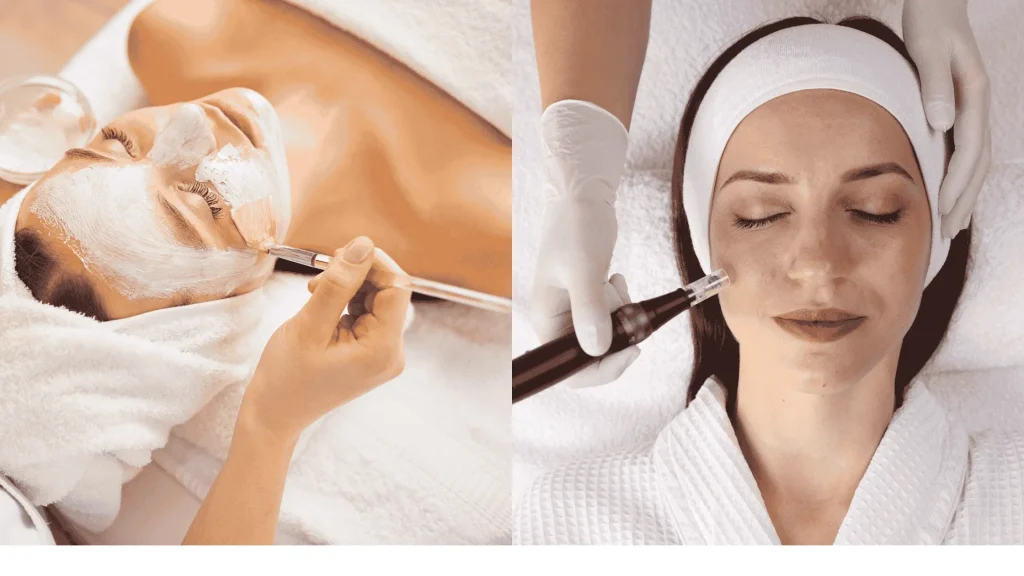
Microneedling vs Chemical Peel for Acne Scars
When it comes to acne scars, choosing the right treatment can make a big difference. In the comparison of microneedling vs chemical peel for acne scars, microneedling often has the advantage. This is because microneedling works by creating tiny micro-injuries in the skin, which stimulates the body’s natural collagen production deep within the dermis. Over time, this helps to smooth out scar tissue, improve skin texture, and reduce the appearance of deeper acne scars.
On the other hand, chemical peels mainly target the outer layers of the skin. They are effective for improving surface pigmentation, minor scars, and uneven skin tone, but they may not provide the same level of improvement for deep acne scars as microneedling. For many people, microneedling is preferred when the goal is long-lasting scar reduction and smoother skin.
Microneedling vs Chemical Peel for Wrinkles
When treating wrinkles and fine lines, both microneedling and chemical peels can be effective, but they work in different ways. Chemical peels help smooth the skin’s surface by removing dead skin cells and promoting the growth of fresh, healthy skin. They are particularly useful for fine lines, mild wrinkles, and overall skin brightness.
Microneedling, however, works deeper. By stimulating collagen and elastin production beneath the skin’s surface, it addresses the structural causes of wrinkles and helps rebuild the skin’s natural support system. This makes it especially effective for deeper lines and creases. In many cases, a combination approach using microneedling to rebuild collagen and a chemical peel to improve surface texture provides the best overall results for wrinkle reduction.
Combining Microneedling and Chemical Peel
It is possible to safely combine microneedling and chemical peel for enhanced skin results. Usually, microneedling is performed first to stimulate collagen and improve skin structure. After your skin has recovered, a chemical peel can be applied to target surface issues like pigmentation, sun damage, and fine lines. This combined approach allows you to get the benefits of both treatments: deeper rejuvenation from microneedling and smoother, brighter skin from the chemical peel.
However, it’s important to consult a professional before combining treatments. Proper timing and technique are crucial to avoid irritation or over-treatment. A trained provider can design a customized plan that addresses your specific skin concerns safely and effectively.
Microneedling vs Chemical Peel: Which Is Better?
When deciding between Chemical Peel vs Microneedling, it helps to see a clear comparison of how each treatment works. The table below highlights their key differences, including skin concerns they target, recovery time, and expected results. This makes it easier to understand which option may be the best choice for your skin goals.
| Feature | Chemical Peel | Microneedling |
| Mechanism | Exfoliates skin with a chemical solution | Creates micro-injuries to stimulate collagen |
| Ideal For | Fine lines, sun damage, pigmentation | Acne scars, wrinkles, and texture issues |
| Recovery | 3–7 days | 1–3 days |
| Longevity | Immediate results may need repeat sessions | Gradual results over weeks, long-lasting |
| Comfort | Mild tingling | Mild redness, temporary tightness |
| Combined Use | Can enhance results with multiple sessions | Can complement chemical peels |
Conclusion
Choosing between Chemical Peel vs Microneedling depends on your skin concerns, goals, and the results you want to achieve. Both treatments are highly effective, and in some cases, combining microneedling and chemical peel can provide even better results for acne scars, wrinkles, and overall skin rejuvenation.
Don’t wait to get the skin you’ve always wanted. Whether it’s Chemical Peel vs Microneedling, or a combination of both, Arynova Aesthetics provides expert care and customized treatments to deliver real, visible results. Book your appointment now here and start your journey to smoother, brighter, and healthier skin.
FAQs
1. Should I do a chemical peel or microneedling first?
It depends on your skin goals. Usually, microneedling is done first to stimulate collagen, followed by a chemical peel to improve surface tone and texture. Always consult a professional for a safe, effective treatment plan.
2. Why does my skin look older after microneedling?
Temporary redness, swelling, or slight peeling can make skin appear older immediately after microneedling. This is normal and part of the healing process. Once the skin recovers, collagen production improves texture, smoothness, and overall youthful appearance.
3. Is microneedling good for rosacea?
Microneedling can help improve skin texture, but it is not always recommended for active rosacea, as it may cause irritation. Consult a dermatologist to determine if microneedling or alternative treatments are safer for sensitive skin.
4. Is there anything better than microneedling?
The best treatment depends on your skin concerns. Chemical peels, laser therapy, or a combination with microneedling can sometimes deliver superior results for acne scars, wrinkles, and pigmentation. Professional consultation ensures you choose the most effective approach.